8 Pet Emergency Signs in Dogs and Cats: When Not to Wait
Nov 4, 2026 7 min read
Imagine it's 2 a.m. and your male cat has gone to the litter box for the fifth time in an hour. He squats, strains, and nothing comes out. "I'll take him in first thing tomorrow," you tell yourself. It sounds like the easiest call of the night, but Cornell's Feline Health Center says that for this exact situation, the time from complete urinary blockage to death may be less than 24 to 48 hours.
We run an online vet consultation service at Dr. Panje, which is exactly why we owe you honesty: online advice is great for a lot of questions, and a waste of precious time for others. This article will help you tell the two apart.
What can an online consultation do, and what can't it?
In a piece written by its president, the American Veterinary Medical Association (AVMA) explains that an in-person exam lets a vet use sight, sound, touch and smell to find problems, and collect the samples needed for a diagnosis — things you simply can't get from a short virtual call. The same piece says the AVMA stands behind telemedicine, "but not as a replacement for in-person care."
On the other hand, Cornell's Riney Canine Health Center names one clear use for remote advice: triage. A vet helps you work out whether your pet needs to be seen right now, can wait a little for urgent care, or is fine to monitor at home. The center adds that these services can also guide you through toxin exposures.
Put together, these two sources say the same thing: online advice is a good decision aid, not a substitute for an exam.
Full disclosure: the AVMA represents more than 100,000 veterinarians in the US, so it naturally champions in-person visits; we run an online service, so we naturally champion online advice. That's why we've tried to rely on points that more independent sources (veterinary schools) also support. Also note that US telemedicine rules (such as requiring a prior in-person visit) don't apply in Iran; there, the regulations of Iran's Veterinary Organization are what count.
Sources for this section: AVMA, Dr. Rena Carlson, December 22, 2023 · Cornell Riney Canine Health Center, June 4, 2025
8 signs that belong in a clinic, not a chat
This list comes from Cornell Riney's "When to go to the ER" guide, with more specialised sources added where we had them. If your pet shows any of these, head to the nearest vet clinic or animal hospital that's open now — you can make the phone call on the way.
| Sign | Why you shouldn't wait |
|---|---|
| Hard, fast or noisy breathing at rest; bluish gums or tongue | Cornell says any trouble breathing is an emergency |
| Straining to urinate with nothing coming out | A complete urinary blockage may kill in under 24–48 hours |
| Swollen belly with dry-heaving (dogs) | Possible bloat (GDV), which progresses fast |
| A seizure lasting over 5 minutes, or several in a row | Cornell advises immediate emergency care |
| Sudden collapse, severe weakness, or can't use their legs | May point to internal bleeding, neurologic or heart problems |
| Ate something toxic or something that could cause a blockage | You often need to act quickly |
| Hit by a car or injured, even if they look fine | Internal injuries may not be visible right away |
| Heavy panting, drooling or weakness after heat exposure | Possible heatstroke; cooling and a vet are needed now |
Table source: Cornell Riney Canine Health Center (this guide is written for dogs; cat-specific points are covered below from separate sources).
Male cats and the litter box: when hours matter
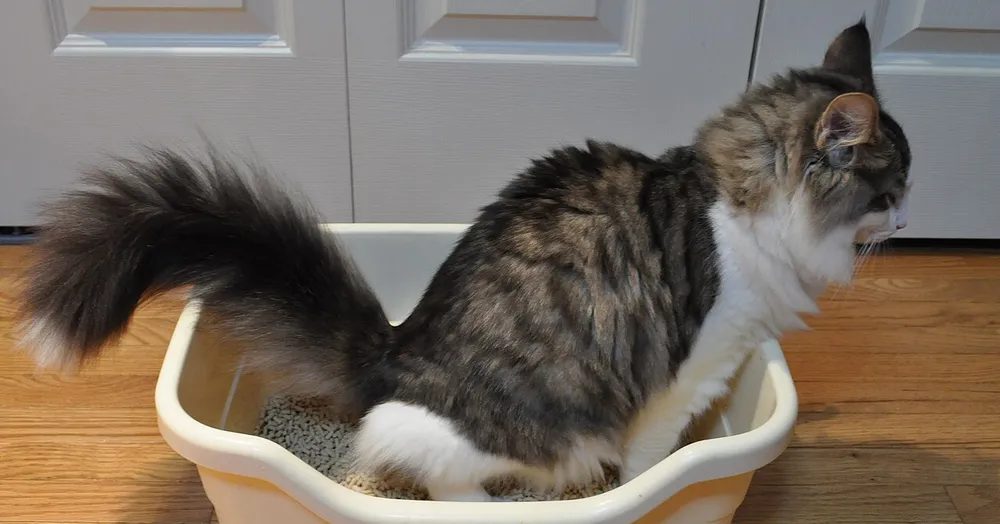

The American College of Veterinary Surgeons (ACVS) explains that male cats can easily develop a blocked urethra. A fully blocked cat may go to the litter box and try to pee, but nothing comes out. He may cry, act restless or hide, and gradually lose his appetite.
Here's something interesting: two reputable sources give different timelines. ACVS says a complete blockage can cause death "in 3–6 days", while Cornell's Feline Health Center says it "may be less than twenty-four to forty-eight hours." Our math is simple: if the shortest figure a credible source gives is under 24 hours, waiting until tomorrow morning could burn through half of that window or more. Cornell states plainly that urethral obstruction is "a true medical emergency" and a suspected cat needs immediate veterinary attention.
Not every cat making frequent trips to the litter box is blocked, though. Cornell notes that a blocked cat behaves much like cats with other urinary problems, except that he passes little or no urine and becomes increasingly distressed, often crying out in pain. But "very little" and "none" are hard to tell apart on a video. ACVS says a blocked cat has a large, painful bladder that a vet can easily feel in the belly — something that can only be done in person.
Sources for this section: ACVS, Urinary Obstruction in Male Cats · Cornell Feline Health Center, Feline Lower Urinary Tract Disease
A cat breathing with its mouth open
Dogs pant after play and that's normal, but cats are a different story. Cornell's Feline Health Center says a cat in respiratory distress may breathe fast, pant noisily with an open mouth, cough, or lower its head and stretch its body forward. Dr. Daniel Fletcher, an emergency specialist at Cornell, says any cat showing signs of breathing difficulty is at high risk of dying if it isn't treated promptly, and advises: "Any time there's a question about an animal's ability to breathe comfortably, get it to a veterinarian right away." He discourages trying to fix it at home, because there are too many possible causes and only an exam and tests can find the right one.
Source: Cornell Feline Health Center, Dyspnea
Deep-chested dogs and a bloating belly


ACVS describes gastric dilatation-volvulus (GDV) as "a rapidly progressive life-threatening condition of dogs that requires immediate medical attention." Early signs, according to the same source, include an anxious look or looking at the belly, standing and stretching, drooling, a swelling belly and retching without producing anything. ACVS links the condition to deep-chested dogs, dogs fed one large meal a day, older dogs and dogs related to others that have had it.
Why can't this be handled online? Because, per ACVS, the diagnosis is confirmed with X-rays, the treatment once confirmed is surgery, and death rates rise as the disease gets more severe.
Source: ACVS, Gastric Dilatation-Volvulus
If they ate something they shouldn't have
Cornell Riney lists eating something toxic (like chocolate, grapes or medication) or something that could cause a blockage (like a toy or a sock) as a reason to go to the ER, and says you often need to act quickly. This is where remote advice can genuinely help: Cornell notes that triage services can guide you through toxin exposures and tell you when home decontamination is appropriate. In other words, the decision about home measures such as making your pet vomit belongs to a vet, not to an internet search. For common foods that are off-limits for dogs, see our article on proper nutrition for adult dogs.
Source: Cornell Riney Canine Health Center
So when is an online consultation useful?
When none of the signs above are present but you're still uneasy. Say your pet vomited once and seems fine, or you can't tell whether a change in behaviour is serious. Cornell says occasional vomiting or soft stool can happen, but repeated episodes within 24 hours, especially with blood, lethargy or refusing food, can signal something more serious. Working out which side of that line you're on is exactly the triage an online vet can help with.
And if it turns out you do need to go in, the consultation wasn't wasted: you'll know how urgently to go and what to tell the vet.
Before you tap "consult", ask yourself three questions
- Is your pet breathing comfortably right now? If the answer is "no" or "I'm not sure," go straight to a clinic.
- Is your pet peeing? Especially if it's a male cat that only strains, don't wait.
- Can your pet stand, walk and stay alert? Collapse, a long seizure or severe lethargy don't belong in a chat.
If all three answers reassure you and you just want someone to tell you what to do next, talk to a vet through the Dr. Panje consultation page. If any of them worries you, close this article and get going.
This article is for general information and does not replace an examination by a veterinarian.